Fishing Weights by Rig: Bullet, Drop Shot, Egg, Split Shot and Bank Sinkers
Dockrig is reader-supported. When you buy through links on this page, we may earn a commission.
Sinkers sort by shape, and each shape is made for certain rigs. Below: each shape, what it does and what to check on the package, then weight ranges and lead vs tungsten.
Shape decides how a weight moves through cover and over the bottom. Weight decides how fast it sinks and how well it holds.
Weight type by rig
| Weight | Rigs | Common range | Shape does what |
|---|---|---|---|
| Bullet | Texas rig, punching | 1/8 to 1/2 oz; 3/4 to 1 1/2 oz punching | pointed nose slides through grass and wood |
| Drop shot | drop shot | 1/8 to 3/8 oz; up to 1/2 oz deep | cylinder or teardrop, line clip on top; cylinder slides through rock |
| Egg | Carolina rig, catfish slip rigs, striper downlines | 1/2 to 2 oz | hole through the middle; line slides freely |
| Split shot | split shot rig, bobber rigs, light bait rigs | very small to about 1/4 oz | pinches on the line anywhere |
| Bank | 3-way rigs, catfish in rock | 1 to 4 oz and up | rounded; snags less on rock |
Sizes are common ranges, consistent with our rig pages. Maker labels give the exact weight.
Bullet weights
A bullet weight has a pointed nose and a hole through the middle. The point faces the rod tip. It slides through grass and over wood with the bait right behind it.
It's the Texas rig weight. Use 1/8 to 1/4 oz in open water under 10 ft. A 1/4 oz tungsten bullet weight is the middle of that range.
Go to 3/8 to 1/2 oz in cover or deeper water. Punching mats takes 3/4 to 1 1/2 oz.
Some bullet weights have a plastic insert in the hole. It protects the line from a sharp edge. Tungsten bullets often have 1.
Who it suits: anglers Texas rigging soft plastics.
Drop shot weights
Drop shot weights clip to the end of the line. A small swivel or slot on top holds the tag. You can slide the weight up or down the tag to change the hook-to-weight distance.
Cylinder shapes slide through rock and snag less. Round and teardrop shapes, like a 1/4 oz tungsten teardrop, settle in place on smooth bottoms. 1/8 to 3/8 oz covers most drop shotting. Some anglers use 1/2 oz in very deep water or wind.
See the drop shot rig for hook-to-weight distances.
Who it suits: finesse anglers fishing deep structure.
Egg sinkers
An egg sinker is an oval weight with a hole through the middle. Line slides through it. A fish can pick up the bait and pull line without feeling much weight.
It's the weight on a Carolina rig, a catfish slip sinker rig and a striper downline. 1/2 to 1 oz for bass, which a pack of egg sinkers from 1/8 to 1 oz covers. 1 to 2 oz for catfish and stripers. More in current.
Add a bead between the egg and the swivel. It protects the knot.
Who it suits: anyone fishing a sliding sinker rig.
Split shot
Split shot are small round weights with a slit. You pinch them onto the line with pliers. They go anywhere on the line and add a little weight.
They're for light rigs: under a bobber, on a light bait rig, or 12 to 24 in. above a hook on a split shot rig. Use the smallest shot that gets the bait down.
Removable split shot have small "ears" on the back. Squeeze the ears and the shot opens. That makes it easy to move or remove without nicking the line.
Who it suits: panfish and bobber anglers, and finesse bass anglers.
Bank sinkers
A bank sinker is a rounded weight with an eye on top. The round shape rolls over rock rather than wedging in. It's a common sinker for 3-way rigs and catfish rigs over rocky bottoms.
Use 1 to 4 oz for most river fishing. Strong current takes more. Tie it to the sinker drop with a lighter line, so a snag breaks there first.
Flat or no-roll bank sinkers are a cousin. They hold better in current over sand and gravel. See catfish rigs for sinker by bottom type.
Who it suits: river anglers fishing bottom rigs.
Lead vs tungsten
Lead and tungsten weights of the same oz weigh the same. The difference is size.
Tungsten is much denser than lead. Pure tungsten is about 19.3 g per cubic centimeter. Lead is about 11.3. So a tungsten weight has about 6/10 the volume of a lead weight of the same mass.
What that means on the water:
- Smaller profile. A tungsten bullet slips through grass a bit easier.
- Harder material. Tungsten is hard. Lead is soft and dents.
- Sound. Hard tungsten clicks against rock and other weights. Some anglers like that.
Fishing tungsten often has a lower tungsten content than pure metal, mixed with a binder. The numbers above are for the pure metals. Check the maker's label for what's in the weight.
Lead rules
Some states restrict lead sinkers or jigs on certain waters. These rules differ by state and can change, so check your state agency before you buy.
Check your state fish and wildlife agency before you buy or fish lead. The AFWA member list links to every state agency.
Nail weights for wacky and neko rigs
Nail weights are thin rods of lead or tungsten. You push them into a soft plastic. They come in tiny sizes, often 1/32 to 1/8 oz.
On a neko rig, the nail goes into the head of a stick bait. The bait falls head first and stands up on the bottom. On a weighted wacky rig, the nail goes into the middle, so the bait still falls flat but faster.
Tungsten nails are shorter for the same weight, so they fit thin baits better. A drop of glue helps them stay in. See senko rigs and the wacky rig for setups.
Pegging and stops
A sliding weight moves along the line. Sometimes you want that. On a Carolina rig, the swivel stops it. On a slip sinker catfish rig, the swivel does the same job.
On a Texas rig in cover, many anglers peg the bullet against the bait. A rubber bobber stop above the weight is the easiest method. It slides to adjust and doesn't nick the line. Toothpicks and pegs made for the job also work.
Split shot are fixed by design. Pinch them where you want them, and move them by opening the shot.
Weights for panfish and bobber rigs
Panfish rigs use small weights. A split shot or 2 under a bobber gets the bait down and stands the bobber up.
Place the shot 12 to 18 in. above the hook. Closer makes the bait sink faster. Farther lets it drift more naturally.
On a slip bobber, the weight has to pull line through the bobber, so it needs a bit more. Match it to the bobber's rated weight if the package lists 1. See the bobber stop knot for the full rig.
Building a small weight box
You don't need every shape and size. A small box covers most freshwater fishing.
- Bullet weights: 1/8, 1/4 and 3/8 oz, plus 1 oz if you punch.
- Drop shot weights: 1/4 and 3/8 oz.
- Egg sinkers: 1/2 and 1 oz for bass; 1 and 2 oz for catfish.
- Split shot: a mixed removable pack.
- Bank sinkers: 2 and 3 oz if you fish rivers.
Keep each size in its own compartment and label it. Many weights look alike at a glance.
How much weight?
Use the lightest weight that does the job. That's the common rule across every rig.
- Texas rig: enough to feel the bottom and get through cover. Start at 1/8 to 1/4 oz.
- Drop shot: enough to keep contact in the depth and wind. 1/4 oz is a common start.
- Carolina rig: 3/4 oz is common. Heavier for deep water and feel.
- Catfish and 3-way: just enough to hold bottom in the current.
- Bobber rig: enough to stand the bobber up, with about 1/2 to 1 in. showing.
Heavier weights snag more and fall faster. Lighter weights fall slower and look more natural. Wind and current push you heavier.
Weights in current
Current changes everything. A 1 oz sinker that holds in a lake can roll downstream in a river.
Shape matters as much as weight here. Round sinkers roll. Flat and no-roll sinkers lie flat and grip the bottom. Bank sinkers sit somewhere in between and snag less on rock.
Start with enough weight to just hold. If the rig drifts, add 1/2 to 1 oz. If it snags every cast, try a flatter shape before going heavier.
Braid helps too. It's thinner for its test, so current pushes on less line. That means you can often hold bottom with a lighter sinker.
What to check on the label
- Weight. In oz, or in grams on some imports. 1 oz is about 28 g.
- Material. Lead, tungsten, steel, brass or tin. Check the rules where you fish.
- Inserts. Bullet weights with plastic inserts protect line.
- Sizes in the pack. Mixed packs often include sizes you won't use.
- Finish. Painted, black or bare. Paint can chip on rock.
- Split shot sizes. Size codes vary by brand. Compare the stated weight.
Common mistakes
- Too heavy. It snags more and falls too fast. Go lighter first.
- Bullet weight backwards. The point faces the rod tip, not the hook.
- No bead on a sliding rig. The weight beats on the knot.
- Split shot pinched too hard. It can nick the line. Use pliers and press just enough to hold.
- Ignoring lead rules. Check your state agency first.
How to pick
- What's the rig? Texas: bullet. Drop shot: drop shot weight. Carolina or slip rig: egg. Bobber: split shot. 3-way: bank.
- What's the cover? Grass: smaller tungsten bullet. Rock: cylinder or bank.
- How deep and windy? Deeper or windier: heavier.
- What do local rules say? Check lead rules before you buy.
Gear for this page
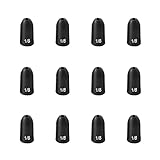 Fishfun Tungsten Bullet Fishing Weights, Insert Free Worm Sinkers, 5 Pack, 1/4ozTungsten bullet weights for the Texas rig.
 Reaction Tackle Tungsten Drop Shot Weights Black Teardrop 1/4 Oz 6-PackTungsten drop shot weights for the drop shot rig.
 SANWEAL 40PCS Egg Sinkers Fishing Weights, 6 Sizes, 1/8-1oz Slip SinkersEgg sinkers for the Carolina rig.
 SANWEAL 120PCS/ 5 Sizes Removable Split Shot Fishing Weights SinkersRemovable split shot for slip floats with a bobber stop knot.
 TKHDBF Bank Sinkers No-Roll Fishing Weight for Surf Catfish SaltwaterNo-roll bank sinkers for catfish rigs.
Read next
- Fishing rigsevery rig on Dockrig compared
- Striper rigsegg sinkers on a downline
- Senko rigsnail weights and bullet weights
- Hook size chartpair the weight with the hook
- Gear we referenceevery product on Dockrig, with the knots and rigs it fits
Sources: standard material densities for lead and tungsten. Common weight ranges, consistent with our rig pages. Lead rules: your state agency, via the AFWA member list. Product details from the maker's listing in each box. Method on our methodology page.