Catfish Rigs: Santee Cooper, Carolina and Three-Way Rigs
Dockrig is reader-supported. When you buy through links on this page, we may earn a commission.
3 rigs cover most catfish water.
The slip sinker Carolina rig holds bait on the bottom in lakes and slow rivers. The 3-way rig holds in current. The Santee Cooper rig adds a small float to lift the bait off the bottom while you drift.
Start with a circle hook: #1 to 5/0 for channel cats, 5/0 to 10/0 for big blues and flatheads.
Spec card
Catfish rigs
- Hook type & size
- circle hook; #1 to 5/0 channel cats, 5/0 to 10/0 blues and flatheads
- Weight type & size
- egg sinker (sliding), no-roll or bank sinker, 1 to 4 oz; more in strong current
- Leader length
- 12 to 24 in. (Carolina); 18 to 36 in. (3-way hook leader); 18 to 24 in. (Santee)
- Knot used
- snell or Palomar to the hook; uni to swivels
- Line
- 15 to 30 lb mono for channel cats; 30 to 50 lb or more for big blues and flatheads
- Water & cover
- river channels, holes 6 to 30 ft, flats, drifts over open lake bottom
- Skip when
- heavy snags for the 3-way sinker drop without a lighter breakaway line
The 3 rigs at a glance
| Rig | Parts, top to bottom | Where |
|---|---|---|
| Slip sinker (Carolina) | egg sinker, bead, barrel swivel, 12 to 24 in. leader, circle hook | lakes, slow rivers, holes |
| 3-way | 3-way swivel; sinker on a 8 to 12 in. drop; hook on an 18 to 36 in. leader | current, rivers, tailwaters |
| Santee Cooper | egg sinker, bead, swivel, 18 to 24 in. leader with a small peg float near the hook | drifting, suspended bait over snags |
All 3 use a swivel. It stops the sinker sliding onto the hook, and it gives a clean leader joint. See knots for swivels.
Slip sinker Carolina rig
The egg sinker slides on the main line. When a catfish picks up the bait, the line slips through the sinker. The fish feels little weight.
Leader length sets how far the bait can move. 12 in. keeps it close to the sinker. 24 in. lets it drift a bit in light current.
It's the same idea as a bass Carolina rig, just heavier. Use 1 to 3 oz of sinker for most lakes and slow rivers.
3-way rig
The 3-way rig is a current rig. The sinker holds bottom. The bait trails downstream on its own leader and moves a little in the flow.
Use a lighter line on the sinker drop, about 4 lb less than the main line. When the sinker hangs in rock, the drop breaks. You keep the swivel, leader and hook. A #10 three-way swivel rated 35 lb suits 15 to 30 lb mono.
Sinker weight depends on current. Start with enough to just hold bottom. 2 to 4 oz is common in rivers. Strong tailwater current takes more.
Santee Cooper rig
The Santee Cooper rig is a slip sinker rig with a float on the leader. The float lifts the bait up off the bottom.
It started as a drift rig on the South Carolina lakes of the same name. The float keeps the hook up out of snags as you drift. It also puts the bait where catfish can see it over mud or debris.
Peg the float a short way above the hook with a toothpick or a float stop. Use a small oval float. It only needs to lift the bait, not hold up the sinker.
Hook size by species
| Target | Circle hook | Common bait |
|---|---|---|
| channel catfish | #1 to 5/0 | cut bait, worms, prepared bait |
| blue catfish | 5/0 to 10/0 | cut shad, skipjack |
| flathead catfish | 5/0 to 10/0 | live bait |
Match the hook to the bait more than the fish. A big piece of cut shad needs room for the point to clear it. A small piece of worm on a 7/0 hook doesn't hook well.
Circle hooks set themselves as the fish turns. Don't jerk. Reel steadily and lift. See bass hooks by type for circle hook shapes and the snell knot for a common way to tie them on.
For big cut bait, the hook needs room. 8/0 circle hooks for catfish fit the blue and flathead rows above.
Sinker by bottom type
| Bottom | Sinker | Why |
|---|---|---|
| mud, sand, slow water | egg sinker | slides; low resistance |
| current over sand or gravel | no-roll or flat sinker | holds without rolling |
| rock | bank sinker | rounded; snags less |
| very strong current | heavier no-roll, 4 oz and up | holds bottom |
The egg sinker is the default for slip rigs. Its hole lets line slide. In current, it can roll, so a flat or no-roll sinker holds better.
On rock, a bank sinker's rounded shape snags less. It still hangs sometimes. That's what the lighter drop line is for.
See fishing weights by rig for each shape.
Rigging the bait on a circle hook
A circle hook needs its point and gap clear. Don't bury the point in the bait.
Cut bait. Cut chunks about the width of the hook gap, 1 to 2 in. for channel cats. Hook through the skin side once, leaving the point exposed. Skin holds better than flesh.
Worms and prepared baits. Thread worms on so the point stays out. Prepared or dip baits often go on a tube or sponge on a treble hook. Follow the bait maker's directions for those.
Live bait. Hook through the lips or just behind the dorsal fin, avoiding the spine. A 5/0 to 8/0 circle is common for a 4 to 6 in. baitfish.
Rebait often. Cut bait washes out after 20 to 30 minutes in current. Fresh bait puts more scent in the water, and scent is how catfish find most of what they eat in muddy or dark water.
Reading catfish water
Catfish hold near structure and current breaks. A few places to start:
- Holes and deep bends. The outside of a river bend is often deeper. Fish hold at the head and tail of the hole.
- Current seams. Where fast water meets slow, food drifts by. A 3-way rig sits right on the edge.
- Channel edges in lakes. The drop from a flat into an old river channel. Drift a Santee Cooper rig along it.
- Wood. Logjams and fallen trees hold flatheads. Fish the edges with a short leader.
On a new piece of water, fish each spot for 20 to 30 minutes before you move. No bites means it is time to move on.
Rods, holders and clickers
Most catfish rigs sit in a rod holder. The fish has to pull line before you react. That's why circle hooks work well here.
A 7 to 8 ft medium-heavy rod is common for channel cats. A longer, heavier rod helps with big blues and heavy sinkers.
Set the reel so the fish can take line. On a baitcaster, use the clicker with the spool free. On a spinning reel, back the drag off, or use a reel with a bait-runner feature. When the rod loads, reel down and lift.
Line choices
For channel cats, 15 to 30 lb mono works for most bank and boat fishing. Mono stretches, which suits circle hooks. The fish can turn and load the hook without tearing free.
For big blues and flatheads, go heavier, 30 to 50 lb or more. Heavy cover and big fish call for it.
Braid is common in strong current. It's thinner for its test, so current pushes it less. Add a mono leader for stretch and abrasion.
Fishing each rig
Slip sinker rig. Cast, let it settle, tighten the line. Put the rod in a holder with the reel on a light drag or clicker. When the rod loads, reel and lift.
3-way rig. Cast upstream or across and let it settle. Keep the rod tip high so the line clears rocks. In a boat, anchor above a hole and drop it back.
Santee Cooper rig. Drift slowly across a flat or channel edge, with several rods out at different distances. Go just fast enough that the lines trail behind the boat at a slight angle.
Where it fits on the water
- Channel cats in a lake cove, 6 to 12 ft: slip sinker rig with a 1 oz egg. Use an 18 in. leader and a 3/0 circle with cut bait.
- River hole below a riffle, 10 to 20 ft: 3-way rig, 2 to 3 oz, 24 in. hook leader.
- Blues drifting a reservoir flat, 15 to 30 ft: Santee Cooper rig, 1 to 2 oz, 7/0 circle, cut shad.
- Flatheads near a logjam: slip sinker rig, heavy line, a short 12 in. leader to keep the fish out of the wood.
Common mistakes
- Hook too small for the bait. The point can't clear. Go up a size.
- Jerking a circle hook. Reel and lift instead.
- Sinker drop as strong as the main line. Snags cost the whole rig.
- No bead. The sinker beats on the swivel knot.
- Too much sinker in light current. The fish feels it. Use just enough to hold.
When not to use these rigs
- Bass on soft plastics. See wacky rig or the bass Carolina rig.
- Fishing many hooks off 1 line. Hook limits vary by state. Check local rules.
- Fast, multi-lure rigs. See Alabama rig for that style, and check your state's rules first.
Common Questions
What hook size for catfish?
Circle hooks from #1 to 5/0 suit most channel cats. Go 5/0 to 10/0 for big blues and flatheads. Match the hook to the bait size.
What sinker for catfish in a river?
A no-roll or flat sinker on a 3-way rig, 2 to 4 oz to start. Add weight until it just holds bottom.
Gear for this page
 LUCKYFISHING Circle Hooks Catfish Hooks Circle Hooks for Saltwater Freshwater OfCircle hooks for catfish rigs with cut or live bait.
 Dr.Fish 30 Pack Fishing 3 Way Swivels, 35-175LB, Three Way Barrel Swivels FishinThree-way swivels for the three-way catfish rig.
 TKHDBF Bank Sinkers No-Roll Fishing Weight for Surf Catfish SaltwaterNo-roll bank sinkers to hold bottom on catfish rigs.
 SANWEAL 40PCS Egg Sinkers Fishing Weights, 6 Sizes, 1/8-1oz Slip SinkersEgg sinkers for the slip sinker catfish rig.
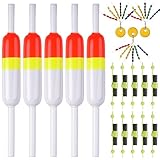 SILANON Fishing Slip Bobbers Kit Fishing Bobbers Floats Balsa Wood Slip Bobbers Slip bobbers for the float version of catfish rigs.
Next rigs
- Fishing rigsevery rig on Dockrig compared
- Carolina rigthe bass version of the slip sinker rig
- Wacky rigweightless soft plastic rig
- Alabama rigmulti-lure umbrella rig
- Bass hooks by typecircle and octopus shapes
- Fishing weights by rigegg, no-roll and bank sinkers
Sources: common catfish rig practice for hook and sinker ranges. Knot details from the linked knot pages. Method on our methodology page. New York State DEC, Iowa DNR, Channel Catfish, for rig layout and hooks.