Texas Rig: How to Rig a Soft Plastic Weedless
Dockrig is reader-supported. When you buy through links on this page, we may earn a commission.
A Texas rig hides the hook point in the bait, so it slides through cover.
Use a 3/0 offset or EWG hook for a 6 to 7 in. worm, with a 1/8 to 3/8 oz bullet weight. Peg the weight in grass or wood. Leave it sliding on open bottom.
It's the rig for cover. On a clean, deep bottom with finicky fish, a drop shot often does better.
Spec card
Texas rig
- Hook type & size
- offset worm or EWG hook, 1/0 to 5/0 by bait length
- Weight type & size
- bullet weight, 1/8 to 1/2 oz open water and light cover; 3/4 to 1 1/2 oz punching mats
- Leader length
- none; weight slides on the main line or is pegged
- Knot used
- Palomar or improved clinch to the hook
- Line
- 12 to 20 lb fluoro; 40 to 65 lb braid in heavy cover
- Water & cover
- grass, laydowns, brush, docks, rock, 2 to 25 ft
- Skip when
- clear, open water with light-biting fish; a drop shot is more natural there
The 5 steps
Slide a bullet weight onto the line, pointed end toward the rod tip.
Step 1. Slide a bullet weight onto the line, pointed end toward the rod tip. Tap to enlarge. Tie on an offset or EWG hook. A Palomar or improved clinch.
Step 2. Tie on an offset or EWG hook. Tap to enlarge. Push the hook point into the nose of the bait about 1/4 in., then out the side.
Step 3. Push the hook point into the nose of the bait about 1/4 in., then out the side. Tap to enlarge. Slide the bait up to the hook eye and turn the hook so the point faces the bait. The offset bend sits inside the nose.
Step 4. Slide the bait up to the hook eye and turn the hook so the point faces the bait. Tap to enlarge. Line the point up with the body, push it through, then just under the skin. The bait should hang straight.
Step 5. Line the point up with the body, push it through, then just under the skin. Tap to enlarge.
Step 1 comes first, before the knot. Forget the weight, and you'll cut the hook off to add it.
In step 3, keep it short. About 1/4 in. into the nose is enough. Go deeper and the bait bunches up on the shank.
Step 5 decides whether the bait runs straight. Hold the bait along the hook and mark where the point meets the body. Push through there. A crooked bait spins and twists line.
"Texposed" means the point goes through and rests just under the skin on the back. It comes through cover clean and sets easily. Burying the point inside the body is more weedless but harder to set.
Hook size by bait length
| Bait | Length | Hook | Size |
|---|---|---|---|
| finesse worm | 4 to 5 in. | offset worm | 1/0 to 2/0 |
| stick worm or ribbon tail | 6 to 7 in. | offset or EWG | 2/0 to 3/0 |
| big ribbon tail worm | 8 to 10 in. | offset or EWG | 4/0 to 5/0 |
| creature or craw | 3 to 4 in. | EWG | 3/0 to 4/0 |
Bait thickness matters too. A thick creature bait needs a wider gap than a thin worm of the same length. That's what EWG (extra wide gap) hooks are for.
See the hook size chart for how numbers run, and bass hooks by type for offset vs EWG.
Weight by depth and cover
| Situation | Bullet weight |
|---|---|
| open bottom, 2 to 10 ft | 1/8 to 1/4 oz |
| open bottom, 10 to 20 ft | 1/4 to 3/8 oz |
| scattered grass, wood, docks | 3/8 to 1/2 oz |
| thick grass or mats (punching) | 3/4 to 1 1/2 oz |
Start light. A lighter weight falls slower, and many bites come on the fall.
In 6 ft of water, the difference between 1/8 and 1/2 oz is easy to see. The light rig drifts down. The heavy 1 drops like a stone. Watch the line, not the rod. Go heavier when you lose bottom contact or can't get through cover.
Most anglers carry a few sizes, not 1. A mixed kit of bullet worm weights covers the open-water and cover rows in 1 box.
Peg the weight or let it slide?
A sliding weight moves up the line on the cast and slides back on the fall. The bait falls a bit after the weight. On open bottom, that looks natural.
A pegged weight stays against the bait. In grass, it keeps weight and bait together, so they slip through as 1 piece. In wood, it stops the weight sliding over 1 side of a branch while the bait goes the other.
There are 3 common ways to peg. Use a rubber bobber stop above the weight, a peg made for the job, or a toothpick tip broken off in the hole. The bobber stop is easiest to move, and it won't nick the line.
Line type differences
| Line | Test | Where |
|---|---|---|
| Fluoro | 12 to 20 lb | open water, wood, docks |
| Braid | 40 to 65 lb | thick grass, mats |
| Mono | 12 to 17 lb | shallow water, a softer hookset |
Fluoro sinks and stretches less than mono, so you feel the bottom. In mats, braid cuts through grass where fluoro can't.
Offset, EWG or straight shank?
An offset worm hook has a small step bend near the eye. That step holds the bait's nose in place. It's the classic pick for thin worms.
An EWG hook has the same step and a wider gap. Thick baits like creatures, craws and fat stick worms fill the gap. The extra room leaves space for the point to come through on the hookset.
A straight shank flipping hook often has a bait keeper. It's common for punching mats with heavy braid. The bait stays put after many flips.
On a 6 to 7 in. worm in open water, either offset or EWG works. Pick EWG once the bait gets thick.
Fishing it
Cast past the target. Let the bait fall on a semi-slack line and watch it. A jump or sideways move is a bite.
Once it's on the bottom, lift the rod tip from 9 to 11 o'clock. Let it fall back, then reel up the slack. Repeat.
In cover, hop it over each branch or stalk. Many bites come as the bait drops off the far side.
When you feel a bite, reel down until the line is tight. Then set hard. The hook has to come through the plastic first.
Common mistakes
- Weight added after the knot. Thread the weight first.
- Crooked bait. It spins and twists line. Rerig with the point lined up.
- Hook too small for a thick bait. The point can't clear the plastic. Go up a size or to EWG.
- Weight too heavy in open water. It falls fast and snags rock. Go lighter.
- Soft hookset. A Texas rig needs a firm set through the bait.
Where it fits on the water
- Laydowns in 4 to 8 ft, spring: a 7 in. stick worm on a 3/0, 1/4 oz pegged.
- Docks in 6 to 12 ft: a 4 in. creature bait on a 3/0 EWG, 3/8 oz.
- Grass edges in 8 to 15 ft, summer: a 10 in. ribbon tail on a 5/0, 3/8 to 1/2 oz.
- Matted grass, 2 to 6 ft: a compact creature, 1 oz pegged, on 50 to 65 lb braid.
When not to use a Texas rig
- Clear, open water with light bites. Try a drop shot.
- Long, flat bottoms you need to cover fast. A Carolina rig drags a bait faster.
- Shallow fish near the surface. A weightless wacky rig falls slower.
Common Questions
What size weight for a Texas rig?
Start with 1/8 to 1/4 oz in water under 10 ft. Use 3/8 to 1/2 oz in cover or deeper. Use 3/4 oz and up to punch mats.
Is a Texas rig weedless?
Mostly. The point is inside or under the skin of the bait. It still snags on rock and dense wood sometimes. A pegged weight helps in grass.
Gear for this page
 Bullet Fishing Sinkers Bass Fishing Weights Kit, 60pcs Worm Fishing Slip WeightsA bullet sinker kit for pegged or free Texas rigs.
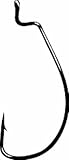 Gamakatsu 25 Pack EWG Offset Worm Hook (Black, 3/0) (58413-25)3/0 EWG offset hooks for thick baits on a Texas rig.
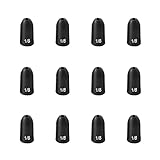 Fishfun Tungsten Bullet Fishing Weights, Insert Free Worm Sinkers, 5 Pack, 1/4ozTungsten bullet weights for punching cover with a Texas rig.
 Strike King Rage Craw Fishing Lure, Green Pumpkin, 4-Inches, 7-PackA 4 in. craw that suits a Texas rig in cover.
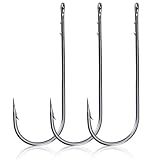 Dr.Fish 50 Pack Straight Shank Worm Hooks Round Bend Bass Fishing Hooks FreshwatStraight shank worm hooks for long worms on a Texas rig.
Next rigs
- Fishing rigsevery rig on Dockrig compared
- Drop shot rigfinesse on open bottom
- Carolina rigweight ahead of a leader
- Wacky rigweightless, hooked in the middle
- Soft plastic baitsworms, creatures and swimbaits
- Bass hooks by typeoffset, EWG and more
Sources: common Texas rig practice for hook and weight ranges. Method on our methodology page. fishing.info Texas rig guide and lurefishingtips.com bullet weight chart, for hook and weight ranges.