Striper Rigs: Live Bait, Tube-and-Worm and Umbrella Rigs
Dockrig is reader-supported. When you buy through links on this page, we may earn a commission.
3 rigs cover most striped bass fishing in US reservoirs and rivers. A live bait downline puts a shad or herring at the depth where stripers hold. A tube-and-worm is a slow trolling rig. An umbrella rig trolls a whole school of baits.
For live bait, start with a 1 to 2 oz egg sinker and a swivel. Then a 5 to 6 ft leader and a circle hook sized to the bait.
Live bait downline
Spec card
Live bait downline
- Hook type & size
- circle hook; #2 to 1/0 for 3 to 5 in. herring or threadfin, 5/0 to 8/0 for big gizzard shad
- Weight type & size
- egg sinker, 1 to 2 oz, sliding above a swivel
- Leader length
- 5 to 6 ft of 12 to 20 lb fluoro
- Knot used
- snell or Palomar to the hook; uni to the swivel
- Line
- 15 to 20 lb mono or 30 to 50 lb braid main line
- Water & cover
- open water over channels and points, fish marked on sonar at 15 to 50 ft
- Skip when
- fish are scattered shallow; free line or planer boards cover that better
The downline is a vertical rig. You drop it straight down from the boat to the depth of the fish on your sonar. The bait swims in a circle around the leader.
Order on the line: egg sinker, bead, swivel. Then the leader and the hook. It's a Carolina rig turned on end, with a much longer leader.
Hook the bait through both lips or through the nose, in front of the eyes. Keep the hook out of the brain. A lively bait matters more than anything else on this rig.
Set the depth by counting reel turns or with a line counter reel. If fish show at 30 ft, put the bait at 28 to 30 ft, just above them. Stripers rise to feed more easily than they drop.
Tube-and-worm
Spec card
Tube-and-worm
- Hook type & size
- single hook at the tail of the tube; a second hook near the head on some tubes
- Weight type & size
- trolled on lead core, wire or a sinker ahead of the leader
- Leader length
- a long mono or fluoro leader; length varies by water and depth
- Knot used
- uni or Palomar to the swivel and the tube's line tie
- Line
- lead core or wire line, or braid with a trolling weight
- Water & cover
- tidal rivers, coastal bays, some large rivers; slow trolling
- Skip when
- on reservoirs where live bait and umbrella rigs are the norm
The tube-and-worm is a slow trolling rig. A long surgical tube has a hook at the tail. A worm goes on the hook. Trolled slowly, the tube spins in a lazy spiral.
It's mostly a coastal and tidal river rig. In freshwater reservoirs, it's much less common. We include it because many striper anglers fish both.
Troll it slowly, near the bottom or along channel edges. Most anglers use lead core or wire line to get it down, or a trolling weight ahead of the leader.
Umbrella rig for trolling
Spec card
Trolling umbrella rig
- Hook type & size
- bucktails or swimbaits on the arms, 3/0 to 6/0; often a larger trailer
- Weight type & size
- frame plus baits; a trolling weight or lead core to set depth
- Leader length
- 6 to 15 ft of 30 to 50 lb mono or fluoro ahead of the frame
- Knot used
- uni or Palomar to the frame's line tie
- Line
- braid or lead core, matched to trolling depth
- Water & cover
- open reservoirs and rivers over bait schools
- Check first
- hooks and lures allowed per line differ by state
A trolling umbrella is a bigger version of the bass Alabama rig. Several arms carry bucktails or swimbaits. A larger trailer often runs behind.
How many hooks you can use differs by state. Some states limit hooks or lures per line. Check your state's rules before you rig it. The AFWA member list links to every state agency.
Troll it over bait schools you find on sonar. Lead core or a trolling weight sets the depth.
Parts at a glance
| Rig | Hook | Weight | Leader | Line |
|---|---|---|---|---|
| Live bait downline | circle, #2 to 8/0 by bait | 1 to 2 oz egg | 5 to 6 ft, 12 to 20 lb fluoro | 15 to 20 lb mono or 30 to 50 lb braid |
| Tube-and-worm | single hook at the tail | lead core, wire or trolling weight | long mono or fluoro leader | lead core or wire |
| Trolling umbrella | 3/0 to 6/0 on baits | frame plus trolling weight | 6 to 15 ft, 30 to 50 lb | braid or lead core |
See the hook size chart for how 1/0 to 8/0 compares, and fishing weights by rig for egg sinkers.
On a downline, the hook choice is simple. A 7/0 inline circle hook suits a big herring or gizzard shad. Go smaller for threadfin.
Matching the hook to the bait
| Bait | Length | Circle hook |
|---|---|---|
| threadfin shad | 2 to 4 in. | 1/0 to 2/0 |
| blueback herring | 3 to 6 in. | #2 to 1/0 |
| gizzard shad | 5 to 10 in. | 5/0 to 8/0 |
A hook too big for the bait weighs it down and kills its swimming. A hook too small can't clear a big shad's head. Match the gap to the bait.
Inline circle hooks have the point in line with the shank. They're common for live bait because they tend to hook fish in the corner of the mouth. See bass hooks by type for inline vs offset circles.
Free line and planer boards
Not every striper rig has weight. A free line is just a leader and hook on the main line. The bait swims freely behind the boat, near the surface.
Planer boards pull free lines out to the side. That spreads baits over a wider path. Both are common early and late in the day, when stripers come shallow.
We cover these briefly here. The downline is the core rig on most reservoirs.
Finding the fish first
Every rig here depends on finding stripers first. They roam open water and follow bait.
- Sonar. Stripers show as arches or clusters near bait balls. Note the depth and set your baits just above it.
- Birds. Gulls and loons diving on the surface often mark bait pushed up by stripers below.
- Surface breaks. Fish blowing up on shad near the top. Free lines and topwater lures fit here.
- Structure. Channel bends, points and humps near deep water hold fish when they aren't roaming.
Once you find a school, slow down. Put downlines straight under the boat at the depth they show.
Depth through the year
Striper depth changes with water temperature and bait. These are rough patterns on many southern reservoirs. Your lake may differ.
- Spring: fish move up rivers and creek arms. Baits at 10 to 25 ft, plus free lines.
- Summer: fish drop into cooler water, often 30 to 50 ft or deeper over channels. Downlines with 2 oz sinkers.
- Fall: fish follow shad toward creek mouths. 15 to 35 ft, mixed downlines and free lines.
- Winter: fish often push bait into creek arms. 15 to 30 ft is common.
Trust your sonar over any chart. If fish show at 22 ft, fish 20 ft. They come up to eat.
Spreading the rods
Most boats run 4 to 8 downlines at once, where rules allow more than 1 rod. Stagger the depths by 5 ft at first, like 20, 25 and 30 ft. When 1 depth gets bit, move the others to match.
Keep the boat moving at a crawl, under 1 mph, with a trolling motor. That keeps the lines straight down.
Keeping bait lively
Live bait is the heart of the downline. A tired herring hangs limp and draws few strikes.
Use a round bait tank with good aeration. Round tanks keep baitfish from piling into corners. Keep the water cool and clean, and don't crowd the tank.
Handle bait as little as possible. Wet your hand before you grab 1. Hook it quickly and get it in the water.
Check the bait every 15 to 20 minutes. If it's barely moving, replace it.
Rods, reels and holders
Downlines often sit in rod holders around the boat. A 7 to 8 ft medium-heavy rod with a soft tip lets the bait swim and lets a striper load the rod before it feels resistance.
Conventional or large spinning reels are common. A line counter reel makes setting depth simple. Without 1, count reel turns or mark the line.
When a rod bends over and stays down, reel steadily. A circle hook needs a steady pull, not a jerk.
Line and leader
The leader is fluoro for live bait. It's less visible, and stripers in clear reservoirs can be line shy. 12 to 20 lb is the common range.
The main line can be mono or braid. Braid is thin, so it sinks straight and gives feel at depth. Mono stretches and suits circle hooks with a rod in a holder.
Join braid to the leader with a swivel on a downline, or a double uni on a free line.
Where it fits on the water
- Summer, reservoir channel in 30 to 50 ft: downline with blueback herring, 2 oz, 6 ft leader, 2/0 circle.
- Winter, fish chasing shad up a creek arm in 15 to 30 ft: downlines and free lines. Gizzard shad on 6/0 circles.
- Tidal river, spring: tube-and-worm on lead core along a channel edge.
- Big reservoir, fall bait schools: a trolling umbrella over the bait, after checking state rules.
Common mistakes
- Weak bait. A tired shad doesn't swim. Change it often.
- Bait set below the fish. Set it just above them.
- Hook too big for small bait. Match it to the bait.
- Setting a circle hook hard. Let the rod load, then reel and lift.
- Skipping the rules check. Hook and lure limits vary by state.
When not to use these rigs
- Bass on soft plastics. See senko rigs and the other bass rigs.
- Catfish on the bottom. See catfish rigs.
- Waters with live bait limits. Some waters restrict which baitfish you can use or move. Check your state's rules.
Common Questions
What size hook for striper live bait?
Match the bait. #2 to 1/0 circle hooks for 3 to 5 in. herring or threadfin. 5/0 to 8/0 for big gizzard shad.
How long should a striper leader be?
5 to 6 ft on a downline is common. Longer leaders give the bait more room to swim. Shorter ones are easier to handle at the boat.
Gear for this page
 Mustad 39944 Demon Perfect Circle Inline Hook Black Nickel Size 7/0 Pack 507/0 inline circle hooks for live bait striper rigs.
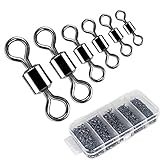 Siasky Fishing Swivels, 200pcs Barrel Swivels Fishing Stainless Steel Swivel FisBarrel swivels to stop the sinker on a striper rig.
 SANWEAL 40PCS Egg Sinkers Fishing Weights, 6 Sizes, 1/8-1oz Slip SinkersEgg sinkers for the slip sinker striper rig.
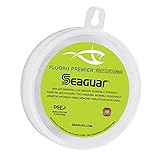 Seaguar 40FP25 Fluorocarbon Premier Leader Material, 40-Pound, 25-YardsA 40 lb fluoro leader for striper rigs.
Next rigs
- Fishing rigsevery rig on Dockrig compared
- Bass hooks by typeinline and offset circles
- Fishing weights by rigegg sinkers and more
- Senko rigsbass soft plastic rigs
- Hook size charthow hook numbers run
- Catfish rigsbottom rigs with circle hooks
Sources: common reservoir and coastal striper practice for rig parts and ranges. State rules: your state agency, via the AFWA member list. Method on our methodology page. The Striper Experience, and Oklahoma Department of Wildlife Conservation, striper guide.