Bass Hooks by Type: Offset Worm, EWG, Drop Shot, Wacky, Octopus and Circle
Dockrig is reader-supported. When you buy through links on this page, we may earn a commission.
Pick a bass hook by shape and the rig it's for first, then by size. Each type below gets what it does and what to check on the package.
5 groups cover nearly every soft plastic and live bait rig: offset and EWG, straight shank, drop shot, wacky and neko, and octopus and circle.
Hook type by rig and size
| Hook type | Rigs | Common sizes | Wire |
|---|---|---|---|
| Offset worm | Texas rig, weightless Texas, Carolina rig | 1/0 to 5/0 | medium to heavy |
| EWG (extra wide gap) | Texas rig with thick baits, creature baits, stick baits | 2/0 to 5/0 | medium to heavy |
| Straight shank worm | Texas rig in heavy cover, punching, long worms | 2/0 to 5/0 | heavy |
| Drop shot / split shot | drop shot, split shot rig | #2 to 1/0 | light to medium |
| Wacky and neko | wacky rig, neko rig | #2 to 2/0 | light to medium |
| Octopus | live bait, drop shot, snells | #6 to 2/0 | light to medium |
| Circle | live bait on rod holders | 1/0 to 5/0 for bass baits | medium |
Sizes are common ranges and vary by maker. A 3/0 from 1 brand can fit a bait differently from another brand's 3/0. See the hook size chart for how numbers run.
Offset and EWG worm hooks
The offset worm hook is the Texas rig hook. A small step bend behind the eye holds the bait's nose. The rest of the bait slides onto the shank, and the point is skin-hooked on the back.
The EWG, like a 3/0 Gamakatsu EWG offset worm hook, is an offset hook with a wider gap. Thick baits fill a standard gap and leave no room for the point to come through. The wide gap fixes that.
Creature baits, craws and fat stick baits go on EWG hooks.
Who it suits: anyone fishing a Texas rig or weightless soft plastic. Match size to bait. Use 1/0 to 2/0 for a 4 to 5 in. finesse worm. Use 3/0 to 4/0 for a thick 5 in. stick bait or a creature.
Straight shank worm hooks
A straight shank hook has no step bend. Many have a bait keeper near the eye, a small barb or wire coil that holds the plastic.
It's common for heavy cover and punching mats. The hook sits straight in line with the bait, so a hookset drives straight through it. Heavy wire holds up on 50 to 65 lb braid.
Long worms of 8 to 10 in. also rig well on a straight shank hook with a keeper. The bait stays put after many casts.
Who it suits: anglers flipping and punching heavy cover, or fishing big worms.
Drop shot and split shot hooks
Drop shot hooks are short and light. Many have a slightly turned eye so the hook stands out from the line with the point up.
You nose-hook the bait, through the very tip. The small hook keeps the bait light so it moves on a shaking rod tip. Light wire sets easily on 6 to 10 lb line and a spinning rod.
Sizes run #2 to 1/0. A #1 drop shot hook is the common middle for 3 to 4 in. baits. See the drop shot rig for rigging.
Who it suits: finesse anglers on clear water and deep structure.
Wacky and neko hooks
Wacky hooks are short-shank, wide-gap hooks for baits hooked through the middle. Neko hooks are similar, often with a slightly longer shank.
Many, like this weedless neko hook, come with a weed guard: a thin wire or a fluorocarbon fiber over the point. It helps around docks and sparse brush, where an exposed point would snag.
For a 5 in. stick bait, #1 to 1/0 is the common range. For a neko, #1 or #2 suits a 5 in. bait. Makers run neko hooks from #2 up to 2/0 for bigger baits. See the wacky rig and senko rigs pages.
Who it suits: anglers fishing stick baits wacky or neko style.
Octopus and circle hooks
Octopus hooks have a short shank, a round bend and often a turned-up eye. They're light and hide well in live bait. They're also common on drop shots and snelled rigs.
Circle hooks turn the point back toward the shank. As a fish swims off with the bait, the hook slides to the corner of the mouth and catches there. Don't jerk. Reel steadily and lift.
Some circle hooks, like a 2/0 offset circle octopus hook, have an offset point, bent slightly to 1 side. Others are inline, with the point in line with the shank. Many anglers prefer inline circles for live bait.
Check your state's rules too. Some waters require circle hooks or inline circles for certain baits.
For bass with live shiners, 2/0 to 4/0 is common. For catfish and stripers, see striper rigs.
Who it suits: live bait anglers and anyone fishing with rods in holders.
Gap, bait thickness and hook size
The gap is the space between the shank and the point. A soft plastic has to fit inside it with room left over. On the hookset, the plastic bunches up and the point has to clear it.
Hold the hook against the bait before you rig. If the bait fills most of the gap, go up a size or switch to EWG. If the hook looks huge next to the bait, go down.
Wire gauge
Light wire bends more easily but sets with less force. It suits light line and spinning rods. Heavy wire holds big fish in cover but needs a harder set and heavier line.
Makers describe wire as light, medium or heavy, or with labels like "2X strong." Those are each maker's own terms. Compare within 1 brand.
Match wire to your rod and line. Light wire on 6 to 10 lb line. Medium for 12 to 17 lb. Heavy for 20 lb fluoro and braid in cover.
Hooks by bait
- Finesse worm, 4 to 5 in.: 1/0 to 2/0 offset on a Texas rig, or #1 to #2 drop shot hook.
- Stick bait, 5 in.: 3/0 to 4/0 EWG Texas style, #1 to 1/0 wacky, #1 to #2 neko.
- Ribbon tail worm, 7 to 10 in.: 3/0 to 5/0 offset or straight shank with a keeper.
- Creature or craw, 3 to 4 in.: 3/0 to 4/0 EWG.
- Paddle tail swimbait, 3 to 5 in.: a jig head, or a 3/0 to 5/0 weighted swimbait hook.
- Live shiner, 4 to 6 in.: 2/0 to 4/0 circle or octopus.
Use this as a starting point. Hold the hook to the bait and adjust 1 size up or down.
Hookset by hook type
Each shape sets a little differently.
Offset, EWG and straight shank. Reel down until the line is tight, then set hard. The point has to push through the plastic before it reaches the fish.
Drop shot and wacky. A sweeping set on light line. The point is exposed, so it doesn't need much force. A hard snap on 6 lb line can break off.
Circle. No set at all. Reel steadily and let the rod load. The hook turns into the corner of the mouth as the fish pulls.
Sharpness and when to replace
A dull point doesn't penetrate. Drag the point lightly across your thumbnail. If it slides instead of catching, it's dull.
Rock and wood dull points fast. After a day on rocky points, check every hook. Some anglers touch up points with a small file. Many just replace them.
Replace any hook that's bent open, rusted or has a rolled point. A fresh hook is the easiest fix in the box.
Keepers, finishes and barbs
Keepers. Some worm hooks have a barb, coil or clip near the eye to hold the bait. They help with long worms and punching. A plain offset bend is enough for most Texas rigs.
Finishes. Black, red, bronze and nickel are common. Pick what you like. Black is the most common on bass hooks.
Barbs. Most bass hooks are barbed. Some waters require barbless hooks. Check your state's rules. You can pinch a barb flat with pliers.
Weighted swimbait hooks and jig heads
Paddle tail swimbaits often go on a weighted swimbait hook. A small lead or tungsten weight sits on the shank, and a screw or spring lock holds the bait's nose. Sizes run 3/0 to 5/0 for 4 to 6 in. baits.
A jig head is the other option. A 1/8 to 1/4 oz head with a 2/0 to 3/0 hook suits 3 to 4 in. paddle tails. See soft plastic baits for swimbait rigging.
Building a small hook box
You don't need every type. A small box with 6 compartments covers most bass fishing.
- EWG, 3/0: stick baits and creatures on a Texas rig.
- Offset, 2/0: finesse worms.
- Straight shank, 4/0, heavy wire: if you flip or punch.
- Drop shot, #1: finesse rigs.
- Weedless wacky, 1/0: stick baits around docks.
- Circle, 3/0: live bait.
Label each compartment with the type and size. Loose hooks look alike, especially in black finish.
What to check on the label
- Size. Many packages show the hook at actual size. Hold it against your bait.
- Gap. Standard, wide or extra wide. Pick by bait thickness.
- Wire. Light, medium, heavy, or "2X" style labels. Match it to your line.
- Point and eye. Inline or offset point. Straight, turned up or turned down eye.
- Count. Packs range from a few to 50 or more. Check before you compare.
- Finish. Black, red, bronze or nickel. Mostly preference.
How to pick
- What's the rig? Texas: offset or EWG. Drop shot: drop shot hook. Wacky or neko: wacky hook. Live bait: octopus or circle.
- How thick is the bait? Thick: EWG. Thin: standard offset.
- What's the cover? Heavy cover: straight shank, heavy wire. Docks and brush: weedless wacky.
- What line? Light line: light wire. Braid in cover: heavy wire.
- Rod in a holder? Circle hook.
Common mistakes
- Standard gap on a thick bait. The point can't clear. Go EWG.
- Heavy wire on 6 lb line. You can't drive it home. Go lighter.
- Jerking a circle hook. Reel and lift.
- Exposed hooks in brush. Use a weed guard or a Texas rig.
- Comparing sizes across brands. Check the actual-size picture.
Gear for this page
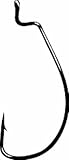 Gamakatsu 25 Pack EWG Offset Worm Hook (Black, 3/0) (58413-25)3/0 EWG offset hooks for the Texas rig.
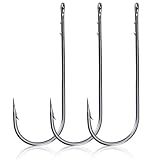 Dr.Fish 50 Pack Straight Shank Worm Hooks Round Bend Bass Fishing Hooks FreshwatStraight shank hooks for long worms on Texas and Carolina rigs.
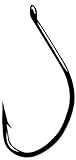 Gamakatsu Split Shot/Drop Shot Hook-Pack Of 25 (Black, 1)#1 hooks for the drop shot rig.
 VMC, Weedless Neko Hook, 1/0 Hook Size, Black/Nickel, Package of 5 (WNK#1/0BNPP)1/0 weedless neko hooks for the wacky rig and neko.
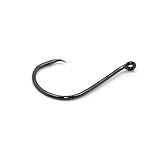 Gamakatsu Circle Offset Point Octopus Hook-Pack Of 25 (Black, 2/0)2/0 circle octopus hooks for live bait on catfish rigs.
Read next
- Fishing rigsevery rig on Dockrig compared
- Striper rigscircle hooks for live bait
- Senko rigshooks for 5 stick bait rigs
- Hook size charthow hook numbers run
- Gear we referenceevery product on Dockrig, with the knots and rigs it fits
Sources: common hook types and size ranges, consistent with our rig pages. Product details from the maker's listing in each box. Method on our methodology page. Rapala/VMC neko hook sizes.