Soft Plastic Baits for Bass: Worms, Creatures, Swimbaits and How to Rig Each
Dockrig is reader-supported. When you buy through links on this page, we may earn a commission.
Soft plastics sort by type, and each type suits certain rigs. Below, each type gets its common length, hook size, what it does and what to check on the package.
Bait type decides the rig. Length decides the hook. Material decides whether the bait sinks or floats.
Bait type by rig, length and hook
| Bait type | Common rigs | Length | Hook |
|---|---|---|---|
| Stick bait | wacky, weightless Texas, neko, Texas | 4 to 6 in. | #1 to 1/0 wacky; 3/0 to 4/0 EWG Texas |
| Finesse worm | drop shot, Texas, shaky head | 3 to 5 in. | #2 to #1 drop shot; 1/0 to 2/0 offset |
| Ribbon tail worm | Texas, Carolina | 6 to 10 in. | 2/0 to 5/0 offset or straight shank |
| Creature bait | Texas, Carolina, flipping | 3 to 5 in. | 3/0 to 4/0 EWG |
| Craw | Texas, jig trailer, Carolina | 3 to 4 in. | 3/0 to 4/0 EWG |
| Paddle tail swimbait | jig head, weighted swimbait hook, Alabama rig | 3 to 5 in. | 1/8 to 1/4 oz head, 2/0 to 4/0 |
| Ned bait | Ned rig | 2.5 to 3 in. | light mushroom head |
Ranges match our rig pages. The hook size chart shows how the numbers run.
Salt, buoyancy and material
Soft plastics differ in what they're made of. That changes how they fall and sit.
- Salt-impregnated baits are heavier and sink on their own. Many stick baits are made this way. They're soft and tear easily.
- Standard plastisol baits sink slowly or hover, depending on the formula.
- Elastomer baits are stretchy and tough. Many float. They suit rigs where the tail should stand up, like the Ned and neko.
Salt and softness trade off against durability. A soft, salty stick bait falls beautifully but may last 1 or 2 fish. A tough elastomer bait can last many fish but may need weight to sink.
Elastomer baits can react with other plastics. Many makers say to store them apart. Check the package.
Stick baits
A stick bait, like a 5 in. senko-style stick worm, is a thick, straight soft plastic with no tail. It does very little on its own. That's the point. On the fall, it wobbles and shakes.
It's the most flexible bait here. Rig it wacky, weightless Texas, neko or Texas. See senko rigs for each.
- Length: 5 in. is the all-round size. 4 in. for smaller fish, 6 in. for bigger.
- Hook: #1 to 1/0 wacky; 3/0 to 4/0 EWG Texas.
- Who it suits: anglers fishing shallow cover, docks and spawning flats.
Creature baits
Creature baits, such as a 4 in. Rage Bug, have legs, arms or flappers. They're bulky and move water. They're made to look like crawfish, bugs or something in between.
They're a Texas rig and flipping bait. The bulk slows the fall and gives fish a big target in cover. The thick body needs an EWG hook.
- Length: 3 to 5 in.
- Hook: 3/0 to 4/0 EWG.
- Who it suits: anglers pitching and flipping grass, wood and docks.
Paddle tail swimbaits
A 4 in. paddle tail swimbait has a flat tail that kicks on a steady retrieve. It swims like a baitfish.
Rig it on a jig head, a weighted swimbait hook, or the arms of an Alabama rig. Reel it steadily, just fast enough for the tail to kick.
- Length: 3 to 5 in.
- Hook: a 1/8 to 1/4 oz jig head with a 2/0 to 3/0 hook for 3 to 4 in. baits. A 3/0 to 5/0 weighted swimbait hook for bigger ones.
- Who it suits: anglers fishing open water, points and grass edges where bass chase baitfish.
Ned baits
Ned baits, like the 2.75 in. Z-Man Finesse TRD, are short, about 2.5 to 3 in., and usually made of a floating material. On a light mushroom head, they rest with the tail up.
The Ned rig is slow. Drag it, hop it a little, pause. It's a cold-water and pressured-fish rig on rock and clean bottoms.
- Length: 2.5 to 3 in.
- Head: a light mushroom jig head.
- Who it suits: finesse anglers on spinning gear, 4 to 15 ft.
Craws
Craws, like a 4 in. Rage Craw, are shaped like crawfish, with 2 claws. The claws flap or rise on the fall.
They're a Texas rig bait and a popular jig trailer. On a Carolina rig, they crawl along behind the weight.
- Length: 3 to 4 in.
- Hook: 3/0 to 4/0 EWG on a Texas rig.
- Who it suits: anglers fishing rock, wood and grass where crawfish live.
Worms
Worms come in 2 main shapes. Finesse worms are thin, 3 to 5 in., for drop shots and light Texas rigs. Ribbon tail worms are longer, 6 to 10 in., with a thin tail that swims on the fall and retrieve.
A finesse worm goes on a #2 to #1 drop shot hook or a 1/0 to 2/0 offset.
A ribbon tail goes on a 2/0 to 5/0 offset or straight shank, by length. See the drop shot rig and the Texas rig.
Tail styles and what they do
The tail decides how a soft plastic moves, and when.
- No tail (stick baits): moves on the fall and when shaken. Almost nothing on a steady pull.
- Straight or pin tail (finesse worms): a small quiver. Suits drop shots and slow presentations.
- Ribbon tail: swims on the fall and on a slow lift. More action at lower speeds.
- Paddle tail: kicks on a steady retrieve. Needs forward motion to work.
- Flappers and claws (creatures, craws): flutter on the fall and when hopped.
Pick the tail for the way you'll fish it. A paddle tail sitting still does nothing. A stick bait reeled steadily does little.
Trailers for jigs and spinnerbaits
Soft plastics also go on other lures. A craw or creature on a jig adds bulk and slows the fall. A small paddle tail on a spinnerbait or bladed jig adds a kicking tail.
Match the trailer length to the lure. A 3 in. craw suits most 3/8 to 1/2 oz jigs.
Catfish and soft plastics
Most catfish anglers use cut or live bait. Some soft plastics, often scented, work for channel cats. Rig them on a circle hook on a slip sinker rig. See catfish rigs for the rig itself.
Colors
Color is a long debate. We keep it simple:
- Clear water: natural colors. Greens, browns, smoke and translucent shades.
- Stained water: darker colors or brighter accents.
- Muddy water: dark solids like black and blue.
Match the bait to what bass eat where you fish. Green and brown for crawfish. White and silver for shad.
Rigging any soft plastic straight
A crooked bait spins on the retrieve, twists your line and looks wrong to fish. Straight rigging matters more than the brand or the color.
Before you push the hook through, hold the bait next to the hook and note where the bend lines up with the body. That's where the point should come out. Push it through there, then skin-hook the point on the back so the bait hangs in a straight line.
Check it in the water beside the boat. If the bait rolls or turns as you pull it, take it off and rig it again. It takes 20 seconds and saves an hour of twisted line.
Matching bait to season and depth
In spring, bass move shallow and many anglers reach for stick baits and creature baits fished slowly around spawning areas in 2 to 6 ft of water.
In summer, fish split up. Some stay shallow in grass and shade, where creatures and craws on a Texas rig work well. Others move out to ledges and points in 12 to 25 ft, where a drop shot worm or a Carolina rigged lizard covers the depth.
In fall, bass follow baitfish, so paddle tail swimbaits come into their own on points and flats.
In winter, slow everything down. A Ned bait or a small finesse worm, crawled along the bottom in 10 to 20 ft, is often the most practical choice.
Scent and salt
Many soft plastics are salted, scented or both. Makers say it helps fish hold on longer.
What salt clearly changes is weight. A salted bait sinks faster and falls more steadily than the same shape without salt. Scent attractants can be added to any bait. They're optional.
Storage and care
Keep baits in their original bags. The bags keep them from drying out, sticking together or losing scent.
Heat warps soft plastics. A closed vehicle on a summer day can melt a bag of worms into 1 lump. Store them in a cool, shaded place.
Keep elastomer baits away from standard plastics if the package says so. Some materials react and fuse together.
A starter soft plastic box
You don't need every type. 5 bags cover most bass fishing.
- 5 in. stick baits in green pumpkin.
- 4 in. creature baits in a dark color.
- 3 to 4 in. paddle tails in white or shad.
- Finesse worms for drop shots.
- Ned baits for tough days.
Add hooks to match: wacky, EWG, drop shot and a few jig heads. See bass hooks by type for each.
What to check on the label
- Length. It decides the hook size.
- Material. Salted, standard or elastomer. Sinks, hovers or floats.
- Count. Packs vary widely. Soft baits tear quickly, so count matters.
- Scent or salt. Many baits are scented or salted. Neither is required.
- Storage notes. Some materials must be kept apart from other plastics.
How to pick
- What rig? Wacky or neko: stick bait. Drop shot: finesse worm. Ned: Ned bait. Texas in cover: creature or craw. Open water: paddle tail.
- How deep? Shallow: stick bait or creature. Deep: drop shot worm or swimbait on a heavier head.
- How active are the fish? Active: swimbait or ribbon tail. Slow: Ned or stick bait.
- Durability? Lots of fish or snags: elastomer. Natural fall: salted.
Common mistakes
- Wrong hook for the bait. Thick baits need EWG.
- Storing elastomer baits with other plastics. Check the package.
- Crooked rigging. The bait spins and twists line.
- Only 1 color. Bring a light and a dark option.
- Too heavy a weight for a slow-fall bait. Go lighter.
Gear for this page
 nawaish 5'' Senko Bait Soft Stick Worms for Wacky Rig Bass Fishing5 in. stick worms for the wacky rig and Senko rigs.
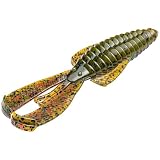 Strike King Rage Bug Fishing Lure, Bama Bug, 4-Inches, 7-PackA 4 in. creature bait for a Texas rig.
 Fish On Tackle 4" Soft Plastic Paddle Tail Swimbait Pack of 12 - Pearl White4 in. paddle tails for the Alabama rig.
 Z-Man Finesse TRD Tackle, Coppertreuse, 2.75"A 2.75 in. finesse bait for the drop shot rig.
 Strike King Rage Craw Fishing Lure, Green Pumpkin, 4-Inches, 7-PackA 4 in. craw for the Texas rig and Carolina rig.
Read next
- Fishing rigsevery rig on Dockrig compared
- Alabama rigpaddle tails on an umbrella rig
- Hook size chartmatch the hook to bait length
- Catfish rigsbottom rigs with circle hooks
- Gear we referenceevery product on Dockrig, with the knots and rigs it fits
Sources: common bait types and rigging practice, consistent with our rig pages. Product details from the maker's listing in each box. Method on our methodology page.