Improved Clinch Knot: Turns by Line Weight and When to Skip It
Dockrig is reader-supported. When you buy through links on this page, we may earn a commission.
An improved clinch takes 5 steps and 5 to 7 turns, depending on line weight. Use 7 turns on light mono around 6 lb and 5 turns at 15 to 20 lb. Skip it on braid, where it tends to slip.
It's a mono and fluoro knot. On those lines it ties fast and passes 1 strand through the eye. That makes it a common pick for crankbaits and small hooks.
Spec card
Improved clinch knot
- Connects
- line to hook, lure or swivel
- Line types
- mono · fluoro (not braid)
- Through the eye
- 1 strand
- Turns
- 5 to 7 by line weightmore on light line, fewer on heavy; see the table
- Line per tie
- about 6.5 in.6 in. tag + 0.5 in. trim, our assumption
- Don't use for
- braid; line to line; heavy line over about 25 lb
The 5 steps
Pass the line through the eye. Pull about 6 in. of tag through.
Step 1. Pass the line through the eye. Tap to enlarge. Wrap the tag around the standing line 5 to 7 times. Twist the hook or lure to make the turns, keeping them even.
Step 2. Wrap the tag around the standing line 5 to 7 times. Tap to enlarge. Pass the tag through the small loop next to the eye. That loop formed when you started the turns.
Step 3. Pass the tag through the small loop next to the eye. Tap to enlarge. Pass the tag back through the big loop you just made. This tuck is the "improved" part.
Step 4. Pass the tag back through the big loop you just made. Tap to enlarge. Wet the knot and pull the standing line to seat it. Hold the tag lightly as it closes, then trim it.
Step 5. Wet the knot and pull the standing line to seat it. Tap to enlarge.
Step 4 is what separates this from the plain clinch. Without the tuck, you have 4 steps and a knot that can unwind under load. With it, the tag is trapped against the turns.
Watch the tag in step 3. It goes through the small loop right at the eye, not the loop at the top of the turns. Mixing those 2 loops up is the most common miss. The knot looks almost right when it happens.
Look twice before you pull. It takes about 2 seconds, and it saves a lure.
In step 5, pull the standing line, not the tag. The turns should spiral down neatly toward the eye. If they bunch or cross, cut it and retie. A crooked clinch is easy to spot and cheap to replace.
How many turns for your line weight?
Our assumptions
- Range: what published clinch instructions give. Sources agree on the direction, not on exact counts.
- Direction: light line takes more turns, heavy line fewer.
- Lines: mono and fluoro only.
| Line weight | Turns | Note |
|---|---|---|
| 4 to 8 lb | 5 to 7 | thin line, more turns to grip |
| 10 to 12 lb | 5 or 6 | |
| 14 to 20 lb | 5 | the usual bass range |
| 25 to 30 lb | 4 | turns get hard to close |
| over 30 lb | switch knots | not recommended over 30 lb |
Why fewer turns on heavy line? Stiff 20 lb fluoro fights each turn. Past 5, the coils pile up instead of lying flat. The knot then seats crooked.
Why more on light line? A 6 lb mono turn has very little surface. The knot leans on the number of turns for its grip, and 7 turns give the tag more to bite on than 5. That's the whole logic.
Line used per tie
Our assumptions
- Tag: 6 in. pulled through in step 1. Change it if you tie with less.
- Trim on a retie: 0.5 in. above the old knot.
- Shortest leader you'll fish: 18 in.
At those numbers, each tie uses about 6.5 in. of line.
| Leader | Line to spend | Reties at 6.5 in. |
|---|---|---|
| 24 in. | 6 in. | 0 |
| 36 in. | 18 in. | 2 |
| 48 in. | 30 in. | 4 |
Those match the uni figures, since both use a 6 in. tag. The full comparison with the Palomar is on our swivel knot page.
Unlike a Palomar, the clinch costs the same with a big lure. Nothing has to pass over the bait. On a 4 in. crankbait, a Palomar needs about 12.5 in. per tie. The clinch still needs about 6.5 in.
Small hooks, big plugs, cold hands
The clinch has a few habits that change with what you tie to.
Small hooks, sizes 6 to 10. Hold the hook in pliers or a hook holder for step 2. A handheld knot tyer does the same job.
Twisting a tiny hook with your fingers makes uneven turns. Keep the tag a full 6 in. even though the hook is small, since you need something to hold.
Crankbaits and jerkbaits. Tie to the split ring if the lure has one, or to the line tie if it doesn't. Some anglers prefer the line tie. Either way, check that the turns didn't slip off the ring and onto the lure body. That's a quick look after step 5.
Cold hands. Count turns out loud. Numb fingers lose count at 5 or 6, and a clinch with 3 turns on 8 lb mono is a slip waiting to happen. Gloves with the thumb and finger cut off help on winter crappie trips.
Spinning gear in wind. Pin the standing line against the rod grip with your palm while you wrap. It keeps the turns from opening up.
Mono, fluoro and braid: what changes
| Line | Works? | Watch for |
|---|---|---|
| Mono | yes, the classic use | wet it; friction heat weakens and curls mono |
| Fluorocarbon | yes | stiff, so close slowly; 5 turns at 15 lb and up |
| Braid | no | slick braid can slip through the turns |
The braid problem is well known. Braid is thin and slick, and the clinch has nothing locking it except friction. For braid, see knots for braided line or tie a Palomar.
The clinch was built for mono, and plain nylon is where it closes most easily. A spool of 10 lb Stren Original monofilament is a typical example of the line the turns table assumes. Think panfish, trout and light bass rigs.
Improved clinch or Palomar?
| Question | Improved clinch | Palomar |
|---|---|---|
| Strands through the eye | 1 | 2 |
| Turns to count | 5 to 7 | none |
| Braid | no | yes |
| Big lures | same line cost | loop must clear the lure |
| Small eyes, heavy fluoro | fits | may not fit doubled |
On mono and fluoro with a crankbait, the clinch is simpler. On braid, the Palomar is the safer habit. With a jig or worm hook, either works on mono or fluoro.
Where it fits on the water
- Squarebill crankbait on 12 lb fluoro, 2 to 6 ft over rock: 6 turns, no loop to clear the 2 trebles.
- Size 6 bait hook for bluegill on 6 lb mono: 7 turns. The single strand fits the small eye.
- Barrel swivel on a catfish rig with 15 lb mono: 5 turns. Check that the swivel's rated lb is above your line.
- Topwater on 15 lb mono: 5 turns. Many topwater anglers stay on mono, and the clinch suits it.
When to skip the improved clinch
- Braid. It tends to slip. Use a Palomar or a uni with extra turns.
- Heavy line, 25 lb and up. The turns won't close neatly.
- Line to line. Use a double uni.
- You want the lure to swing. The clinch cinches tight to the eye. Tie a non-slip loop.
Double clinch variant
Some anglers pass the line through the eye twice before wrapping. It's called a double clinch. That's a variant, not the standard knot. It needs an eye big enough for 2 passes.
Common Questions
Is the improved clinch the same as the fisherman's knot?
Many anglers say "fisherman's knot" and mean a clinch. Rope books use that name for a different knot that joins 2 lines.
Our fisherman's knot page sorts out the names. When a friend says "tie a fisherman's knot" to a hook, they usually mean this one.
Can you tie an improved clinch on fluorocarbon leader?
Yes. Use 5 turns from 14 lb up, wet the knot, and close it slowly.
Fluoro is stiff. Fast pulls can kink the line where it bends through the eye. If the knot looks curly or crooked after seating, cut it back and retie with fewer turns.
Why does a clinch knot slip?
Check 3 things. Did the tag go back through the big loop in step 4? Did you use enough turns for the line? Is the line braid?
A missed tuck turns it into a plain clinch. Too few turns leave little grip. Braid slips in clinch-style knots. Fix the cause, then retie.
Gear for this page
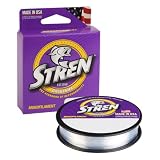 Stren Original Monofilament Fishing Line, Clear/Blue Fluorescent, 10lb | 4.5kg, 10 lb mono, the line the improved clinch suits.
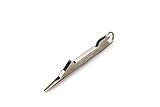 TIE-FAST Fishing Line Knot Tyer, SilverHelps with small hooks when you tie the improved clinch.
 Berkley Trilene® XL®, Clear, 10lb | 4.5kg, 300yd | 274m Monofilament Fishing LinClear 10 lb mono, another good match for the improved clinch.
 Booms Fishing FC2 Fishing Knot Tools Fishing Line Clipper with RetractorClips the tag after the improved clinch is wet and seated.
Next knots
- Fishing knots by connectionpick by connection and line
- Uni knotanother 1-strand knot, and it works on braid
- Double uni knotline to line
- Fisherman's knotwhich knot that name means
- Swivels and snapswhat you tie the clinch to
Sources: published improved clinch instructions for steps and turn ranges. Line-use figures from our calculator on the methodology page.. Animated Knots, Improved Clinch Knot, for turns and the 30 lb limit.