Fisherman's Knot vs Fisherman's Bend: Which One Anglers Mean
Dockrig is reader-supported. When you buy through links on this page, we may earn a commission.
"Fisherman's knot" names at least 3 different knots. In rope books, it joins 2 lines with 2 overhand knots. The fisherman's bend ties rope to a ring. And at the tackle counter, people often say it when they mean the clinch knot.
So check what the job is first. Joining 2 lines? Read on. Tying line to a hook? You want the improved clinch.
Which knot is which
| Name | What it joins | Built from | Where you'll see it |
|---|---|---|---|
| Fisherman's knot | 2 lines end to end | 2 overhand knots, 1 per line | rope books, light line repairs |
| Double fisherman's | 2 lines end to end | 2 double overhand knots | climbing rope, mono repairs |
| Fisherman's bend | rope to a ring or anchor | 2 turns on the ring plus a half hitch | boat lines, not fishing line |
| "Fisherman's knot" at the tackle shop | line to hook | usually the clinch | casual talk |
The first 2 rows are the fishing-line knots on this page. They are simple and easy to check. For braid to leader, neither one is the usual choice. That job goes to the double uni or the FG.
Spec card
Double fisherman's knot
- Connects
- 2 lines end to end, similar diameter
- Line types
- mono · fluoro (similar sizes); not braid to leader
- Turns
- 2 wraps per sidea single wrap per side is the plain fisherman's knot
- Overlap to start
- about 8 in.
- Line per join
- about 8 in. from each lineour assumption: the overlap you start with
- Don't use for
- braid to fluoro; lines of very different diameter; line to hook
Fisherman's knot: the 3 steps
Overlap the 2 line ends by about 6 in. Tags point in opposite directions.
Step 1. Overlap the 2 line ends by about 6 in. Tap to enlarge. Tie an overhand knot with the first tag around the other line. Snug it, but don't seat it yet.
Step 2. Tie an overhand knot with the first tag around the other line. Tap to enlarge. Tie an overhand with the second tag around the first line. Pull the 2 standing lines so the knots slide together, then trim.
Step 3. Tie an overhand with the second tag around the first line. Tap to enlarge.
Each overhand grips the other line. When you pull the standing lines, the 2 knots jam against each other. That jam is what holds the join.
It's the quickest line-to-line knot there is. It's also bulky for a 1-wrap knot. Many anglers move on to the double version or a double uni once they learn those..
Double fisherman's: the 3 steps
Overlap the 2 line ends by about 8 in. You need more tag, since each side gets 2 wraps.
Step 1. Overlap the 2 line ends by about 8 in. Tap to enlarge. Wrap the first tag 2 times around both lines, then pass it back through the 2 wraps. That's a double overhand around the other line.
Step 2. Wrap the first tag 2 times around both lines, then pass it back through the 2 wraps. Tap to enlarge. Repeat with the second tag in the other direction. Wet both knots and pull the standing lines until the knots meet. Trim both tags.
Step 3. Repeat with the second tag in the other direction. Tap to enlarge.
The wraps in step 2 should lie side by side. When the knot seats, each side looks like 2 neat coils with an X on the back. Climbers check rope joins this way, and it works on mono too.
If the 2 knots don't meet in step 3, one of them is too loose. Close each knot by its tag first, then slide them together.
Which version for which job
- Repairing a broken mono main line on the bank, 6 to 12 lb: double fisherman's, 2 wraps per side. Then cut it out and respool when you get home.
- Joining 2 spools of the same mono to fill a reel: double fisherman's or double uni. Both work with similar diameters, such as 2 spools of 10 lb Trilene XL.
- Braid to fluoro leader: neither. Tie a double uni or an FG.
- Very different diameters, like 10 lb to 40 lb: neither. The Albright knot handles big gaps.
- Line to hook: neither. That's the clinch, which is the "fisherman's knot" people mean at the counter.
Fisherman's knots vs the uni family
| Question | Double fisherman's | Double uni |
|---|---|---|
| Wraps per side | 2 | 5 to 10 |
| Works with braid | poorly | yes, with extra turns |
| Bulk | 2 compact knots | 2 barrels of turns |
| Easy to tie fast | yes | yes |
| Different line types | not ideal | yes |
The double fisherman's is simple and fast for 2 lines of the same type and size. The double uni covers more pairings. That's why our knots hub points most line-to-line jobs to the double uni or FG.
About the fisherman's bend
The fisherman's bend, also called the anchor bend, ties a rope to a ring. Make 2 turns around the ring, pass the tag through both turns, then add a half hitch around the standing part.
It's a rope knot. It isn't used to tie fishing line to a hook. If a guide calls it a fishing knot, it means rope work on the boat, not terminal tackle.
Line used per join
Our assumptions
- Overlap: 6 in. for the plain knot, 8 in. for the double. Change these to your own habit.
- Line used: the overlap from each line, since the tags get trimmed.
- Trim: about 1/8 in. left on each tag.
| Knot | Overlap | Line used from each side |
|---|---|---|
| Fisherman's knot | 6 in. | about 6 in. |
| Double fisherman's | 8 in. | about 8 in. |
On a spool repair, 8 in. from each side is 16 in. of line in total. That's cheap. On a short leader, it's a lot, which is one more reason to replace a damaged leader rather than join it.
Both knots leave 2 tags, 1 on each side of the join. Trim each to about 1/8 in. so it won't catch in the guides. A line clipper on a retractor stays clipped to your shirt or bag, so it's there for both cuts.
When to skip both
- Braid anywhere in the join. Slick braid needs more turns than 1 or 2 wraps.
- Big diameter gaps. A thin line can pull through a thick line's knot.
- Joints that run through the guides all day. Two jammed knots are bulky. An FG is slimmer.
- Line to hook, lure or swivel. Use a Palomar, uni or clinch.
Common Questions
Is the fisherman's knot the same as the blood knot?
No. Both join 2 lines of similar size. The blood knot wraps each tag around the other line 5 or more times and tucks both tags through the middle.
The fisherman's knot uses 1 overhand per side, and the double uses 2 wraps. The blood knot is common for mono fly leaders. It's slimmer but takes more practice.
Can you use a fisherman's knot to tie on a hook?
Not the rope-book version. It joins 2 lines, not line to an eye.
When someone tells you to "tie on a hook with a fisherman's knot," they usually mean the clinch. Our improved clinch page has the 5 steps and the turn counts.
Which name should you search for?
For joining 2 lines, search "double fisherman's knot" or "double uni." For tying to a hook, search "improved clinch."
"Fisherman's bend" gets you the rope-to-ring knot. Searching by the job, not the name, saves time with these 3.
Gear for this page
 Booms Fishing FC2 Fishing Knot Tools Fishing Line Clipper with RetractorClips both tags after a fisherman's knot.
 Berkley Trilene® XL®, Clear, 10lb | 4.5kg, 300yd | 274m Monofilament Fishing Lin10 lb mono to join with a fisherman's knot.
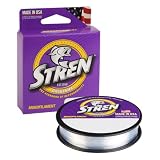 Stren Original Monofilament Fishing Line, Clear/Blue Fluorescent, 10lb | 4.5kg, 10 lb mono for joins with the double uni as well.
Next knots
- Fishing knots by connectionevery knot sorted by job
- Improved clinch knotthe tackle-shop "fisherman's knot"
- Albright knotlines of very different size
- Double uni knotline to line with any line type
- Knot tying toolsclippers and tools by job
Sources: published fisherman's knot, double fisherman's and anchor bend instructions (Animated Knots covers all 3). Method on our methodology page..