Albright Knot: Joining Lines of Very Different Diameters
Dockrig is reader-supported. When you buy through links on this page, we may earn a commission.
An Albright joins a thin line to a much thicker one. The thin line makes 10 wraps over a loop in the thick line. It takes 5 steps. Use it when the diameters are too far apart for a double uni, like 10 lb mono to 40 lb leader.
For 2 lines of similar size, it's more work than you need. Tie a double uni instead.
Spec card
Albright knot
- Connects
- thin line to thick line or wire leader; backing to fly line
- Line types
- mono, fluoro or braid (thin side); heavy mono, fluoro or wire (loop side)
- Wraps
- 10the thin line wraps back over itself and the loop
- Loop in the thick line
- about 3 in.
- Thin-line tag
- 8 to 10 in. to start
- Don't use for
- 2 lines of similar size; line to hook; multi-strand wire
The 5 steps
Form a loop in the thick line. Fold about 3 in. back along itself. Pinch it where the tag meets the standing line.
Step 1. Form a loop in the thick line. Tap to enlarge. Pass 8 to 10 in. of the thin line through the loop. Go in from the top.
Step 2. Pass 8 to 10 in. of the thin line through the loop. Tap to enlarge. Wrap the thin line back over itself and both sides of the loop 10 times. Work toward the closed end of the loop, each wrap tight against the last.
Step 3. Wrap the thin line back over itself and both sides of the loop 10 times. Tap to enlarge. Pass the thin tag back out through the loop. It must leave on the same side it went in.
Step 4. Pass the thin tag back out through the loop. Tap to enlarge. Slide the wraps toward the loop end, then pull tight. Pull the thin standing line first, then both standing lines. Trim both tags.
Step 5. Slide the wraps toward the loop end, then pull tight. Tap to enlarge.
Step 3 is where you hold everything at once. Pinch the loop and the first wraps with your thumb and finger. Wrap with the other hand, then slide your pinch along as the wraps build.
Step 4 is the common miss. If the tag leaves the loop on the wrong side, the wraps can unwind off the end. Check before you pull.
In step 5, go slowly. Pull the thin standing line a little to settle the wraps. Then work them toward the end of the loop. They should stop just short of it. A final hard pull on both standing lines seats the knot.
The locked variant
Some anglers finish with 2 half hitches. The thin line's tag ties them around its own standing line, right where it leaves the wraps. It's often called a locked or improved Albright.
That's a variant, not the standard knot. It adds a step and a little bulk. The idea is to keep the wraps from sliding when the thin line is slick, like braid.
Which jobs suit an Albright
| Job | Thin side | Thick side | Why the Albright |
|---|---|---|---|
| Light mono to heavy leader | 8 to 12 lb mono | 30 to 50 lb mono or fluoro | big diameter gap |
| Braid to heavy mono | 20 to 30 lb braid | 40 lb mono | slick thin line on stiff thick line |
| Line to wire leader | mono or braid | wire leader | wire forms the loop |
| Backing to fly line | Dacron backing | fly line | standard fly connection |
The common thread is a big difference in size or stiffness. The stiff or thick line forms the loop. The thin line does the wrapping.
For bass on braid with a fluoro leader of 10 to 20 lb, the gap is small. The FG or double uni suits that pairing better. The Albright earns its place when the leader is 3 or 4 times the diameter of the main line.
The wire job is the 1 where more mono won't do. For toothy fish, single-strand wire leader forms the loop and your mono or braid wraps around it. Single-strand bends into a clean loop. Multi-strand is a poor fit, as the skip list below explains.
How many wraps?
Our assumptions
- Base count: 10 wraps, from the outline we follow.
- Thin side: mono, fluoro or braid. Braid users often add the lock instead of more wraps.
- Range: published Albright steps cluster around 10. Some use 8 to 12.
| Thin line | Wraps | Finish |
|---|---|---|
| Mono or fluoro, 8 to 20 lb | 10 | standard |
| Braid, 20 to 30 lb | 10 to 12 | add the lock (variant) |
| Backing to fly line | 10 | standard |
Where it fits on the water
- Pike or muskie on 30 lb braid with a single-strand wire leader: the wire forms a 3 in. loop. The braid makes 10 to 12 wraps, plus the lock.
- Catfish from the bank with 15 lb mono and a 40 lb shock leader: a 15 to 40 lb gap is about 2.5 times in test. The Albright handles it with 10 wraps. A 40 lb fluorocarbon leader works as the thick side too.
- Striper on 20 lb braid with 50 lb fluoro near rocks and bridge pilings: the thick leader takes the scraping. Keep it around 3 ft so the joint stays out of the guides.
- Fly reel setup: backing to fly line, 10 wraps, then a smooth coat if the fly line maker recommends one.
Line used per join
Our assumptions
- Loop in the thick line: about 3 in., so about 6 in. of thick line goes into the doubled loop and its tag.
- Thin-line tag: 8 to 10 in. for 10 wraps plus room to hold.
- Trim: about 1/8 in. left on each tag.
So each join costs about 6 in. of the thick line and 8 to 10 in. of the thin line. On a 3 ft leader, 6 in. is 1 sixth of the length. Plan 1 or 2 rejoins per leader before you replace it.
Checking the knot
- Count the wraps. You should see 10, side by side, with no crossings.
- Check the loop end. About 1/8 in. of loop should show past the last wrap.
- Pull both lines steady for 3 seconds. The wraps shouldn't creep toward the loop end.
If the wraps creep, cut the joint off and retie. Don't add wraps to a joint that already moved.
Albright, double uni or FG?
| Question | Albright | Double uni | FG |
|---|---|---|---|
| Diameter gap | large | small to medium | small to medium |
| Wire | single strand, yes | no | no |
| Steps | 5 | 5 | 7 |
| Needs tension | no | no | yes |
When to skip the Albright
- Similar diameters. A double uni is simpler.
- Multi-strand wire. It's built for single-strand wire. Use a crimp or the wire maker's method.
- Line to hook. Wrong knot. See the snell knot or the improved clinch.
- Joint through the guides on every cast. The 10 wraps over a doubled thick line make a lump. Keep the leader shorter than the rod.
Common Questions
Which line forms the loop?
The thicker or stiffer line forms the loop. The thinner line passes through and does the 10 wraps.
If you reverse them, the thin line can't hold a loop shape, and the thick line won't wrap neatly. With wire, the wire is always the loop side.
Can you tie an Albright with braid?
Yes, as the thin line. Braid wraps neatly, but it's slick, so many anglers add the 2 half hitches of the locked variant.
Pull slowly in step 5 so the braid wraps don't cut into a mono loop. Wet the knot first. Trim the braid tag with scissors, not dull clippers.
How close should the wraps sit to the end of the loop?
Just short of the closed end. If the wraps slide off the end, the knot falls apart.
Pull the thin standing line in short tugs to move them. Stop when about 1/8 in. of loop shows past the last wrap. Then pull both standing lines to seat it.
Gear for this page
 AFW Tooth Proof Fishing Wire Single Strand Leader, #5, 44Lb, 30FT - CamoSingle strand wire for an Albright knot bite leader.
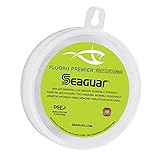 Seaguar 40FP25 Fluorocarbon Premier Leader Material, 40-Pound, 25-YardsA 40 lb fluoro leader for the thick side of the Albright knot.
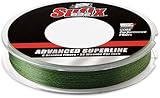 Sufix 832 Braid 20 lb Low-Vis Green 300 yards (660-120G)20 lb braid for the thin side of an Albright knot.
 KastKing Intimidator Fishing Pliers, 5" Split Ring Carbon SteelPliers to pull the Albright knot tight on heavy leader.
Next knots
- Fishing knots by connectionevery knot by job
- Fisherman's knotfor 2 lines of the same size
- Snell knotline to hook on octopus and circle hooks
- Improved clinch knotline to hook on mono and fluoro
- Knot tying toolsscissors and clippers by job
Sources: published Albright knot instructions (Animated Knots and line maker knot cards) for steps and wrap counts. Method on our methodology page.. Animated Knots, Albright Knot; Orvis, Albright Knot; FishingKnots.com, Albright Knot, for wraps and uses.