Arbor Knot: How to Tie Fishing Line to a Reel Spool
Dockrig is reader-supported. When you buy through links on this page, we may earn a commission.
The arbor knot ties line to a reel spool in 2 steps. Tie an overhand around the spool, then a second overhand in the tag. Pull it down tight and trim. That's the whole knot for mono and fluoro.
Braid is different. It can spin on a bare spool, so the knot holds but the line slips around it. Put down mono backing or tape first.
Spec card
Arbor knot
- Connects
- line to reel spool (the arbor)
- Line types
- mono · fluoro directly; braid over backing or tape
- Steps
- 2 overhand knots, 1 around the standing line, 1 in the tag
- Tag to start
- about 6 in.
- Fill level
- just below the spool lipDaiwa: line should sit below the lip; check your manual
- Don't use for
- braid on a bare, smooth spool (it spins); line to hook
The 2 steps
Wrap the line around the spool and tie an overhand knot around the standing line. Leave about 6 in. of tag.
Step 1. Wrap the line around the spool and tie an overhand knot around the standing line. Tap to enlarge. Tie a second overhand in the tag end, then pull the standing line. The knot slides down and locks against the spool. Trim the tag close.
Step 2. Tie a second overhand in the tag end, then pull the standing line. Tap to enlarge.
The second overhand is a stopper. When you pull the standing line, the first overhand cinches around the spool. The stopper jams against it, so it can't slip through.
Open the bail on a spinning reel before step 1. Forget it, and you'll retie.
On a baitcaster, thread the line through the level-wind guide first. It's easy to miss, and you'll have to retie if you do.
Braid on the spool: backing or tape
Braid is slick. On a smooth aluminum or graphite spool, the whole line can rotate around the arbor while the knot itself holds perfectly tight. You crank, and the spool turns under the line. That's the slip anglers describe.
There are 2 common fixes.
- Mono backing. Tie mono, such as 10 lb Trilene XL, to the spool with an arbor knot and wind on a thin layer. Then join the braid to it with a double uni. The mono grips the spool. The braid sits on the mono.
- Arbor tape. Put a strip of tape on the bare spool, then tie the braid over it. Electrical tape is a common choice. 1 or 2 turns is plenty.
Backing also takes up spool space, which saves braid. That matters on a big spool. A 3000 or 4000 size spinning reel can swallow a lot of 10 lb braid.
How much backing? Daiwa says enough to cover the spool, around 20 to 30 m (about 22 to 33 yd). Some anglers use more to save braid. There's no single right amount.
If you're filling a reel, a 300 yd spool of 20 lb Sufix 832 braid usually leaves some over on a bass reel with backing under it. Check the line capacity printed on your spool first.
Spooling a reel, start to finish
- Set up the supply spool. Spinning: on the floor, label side checked against the bail direction. Baitcaster: on a pencil, held by a friend or a box.
- Run the line through the rod guides. Start at the tip, then down to the reel. With 6 or 7 guides, check you haven't skipped 1.
- Open the bail or thread the level-wind. Then tie the arbor knot.
- Wind on 10 to 15 turns under light tension. Stop and check for twist.
- Keep going to about 1/8 in. below the lip. Cut the line and tie on a lure or snap.
For braid, steps 3 and 4 happen twice. First the backing, then the braid after the double uni. Wind the joint on slowly. The knot is about 1/2 in. long and should sit flat.
Spooling direction: spinning vs baitcaster
| Reel | How the supply spool sits | Why |
|---|---|---|
| Spinning | line comes off the supply spool in the same direction the bail turns | reduces twist; flip the supply spool if loops form |
| Baitcaster | supply spool turns on a pencil or rod, line comes straight off | the spool winds line straight on, so twist is less of an issue |
Spinning reels are where direction matters. The bail lays line onto the spool with a twist. If the supply spool unwinds the other way, the 2 twists add up. The result is loops and tangles on the first casts.
A quick test: wind on 10 to 15 turns, then let 2 or 3 ft of slack off near the reel. If the slack line twists into loops, flip the supply spool over and keep going.
Keep light tension either way. Pinch the line between 2 fingers just in front of the reel, or run it through a damp cloth if the line is thin enough to cut skin. Loose line on the spool digs in later.
How full should the spool be?
Fill to about 1/8 in. below the lip of the spool. Daiwa's guidance is to keep the line below the lip. The 1/8 in. figure is a common rule of thumb, not a maker number. Check your reel's manual.
- Overfilled spinning reel: loose coils jump off the spool on the cast.
- Underfilled spinning reel: line rubs the lip, and casts get shorter.
- Baitcaster: many anglers stop a little below full, so the line doesn't rub the frame.
Line capacity is printed on most spools as yards of a given lb test, like 140/8 or 110/10. Those numbers come from the reel maker. Treat them as a guide, since line diameters differ by brand.
Uni knot as an arbor knot
A uni knot tied around the spool works too. Pass the line around the arbor. Tie the uni around the standing line with 4 or 5 turns. Pull it down tight.
Some anglers prefer it because it's 1 knot they already know. For braid, the same backing or tape rule applies.
When to skip the arbor knot
- Braid on a bare spool. Add backing or tape first.
- Line to hook or swivel. Use a Palomar or improved clinch.
- Fly reel backing. Fly anglers often use their own connection method. Check the fly reel maker's instructions.
Common Questions
Does the arbor knot need to be strong?
Not very. The arbor knot only matters if a fish takes all your line. A spinning reel holding 150 yd of 8 lb mono rarely gets near the spool. On most freshwater trips, it never sees a load.
What it must do is grip the spool so the line doesn't slip when you crank. On mono, a snug arbor knot does that. On braid, the backing or tape does it.
Can you put braid straight on a spool with rubber or a grooved arbor?
Some reels have a rubber band or a ridged arbor made for braid. Check page 1 or 2 of your reel's manual. If it says braid-ready, you can tie on directly.
If it doesn't say, use backing or tape. It costs a few minutes and avoids a slipping spool.
Why is new line full of loops?
Most loops on a spinning reel come from line twist. The supply spool was probably unwinding against the bail direction.
Strip off the twisted line. 20 to 30 yd is often enough. Flip the supply spool and rewind. Overfilling adds to it, so stop about 1/8 in. below the lip.
Gear for this page
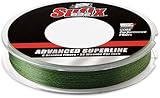 Sufix 832 Braid 20 lb Low-Vis Green 300 yards (660-120G)20 lb braid you spool over mono backing with an arbor knot.
 Berkley Trilene® XL®, Clear, 10lb | 4.5kg, 300yd | 274m Monofilament Fishing Lin10 lb mono for backing tied with the arbor knot.
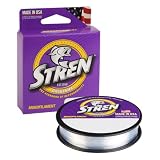 Stren Original Monofilament Fishing Line, Clear/Blue Fluorescent, 10lb | 4.5kg, 10 lb mono that grips a bare spool with the arbor knot.
 Rapala RSD-1 Line ScissorsTrims the tag close to the spool after the arbor knot.
Next knots
- Fishing knots by connectionline to reel, hook and leader
- Snell knotline to hook shank
- Non-slip loop knota loop at the lure
- Albright knotbacking to line of a different size
- Knot tying toolsscissors and clippers by job
- Fishing line for bassmono, fluoro, braid and copolymer by technique
Sources: articles_spec outline for the 2-step arbor knot. Reel maker spooling guidance for fill level. Method on our methodology page.. Daiwa Australia, "How to Put Line on a Fishing Reel," for backing amount and fill level.